
Tampa General Hospital First Academic Health System in Southeast to Adopt Innovative Host-Response Technology to Advance Sepsis Care
Published: Sep 22, 2026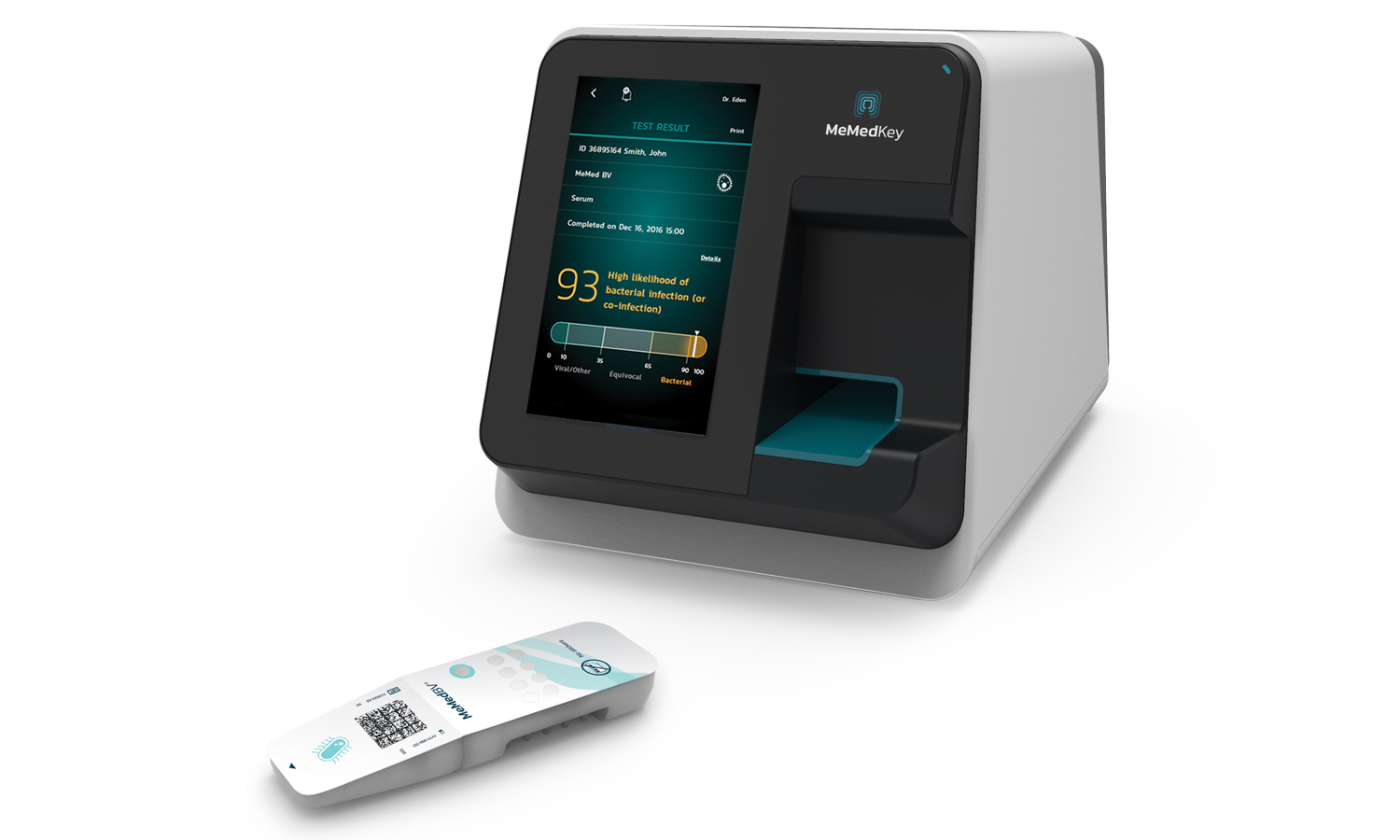
MeMed BV provides results in 15 minutes to help clinicians distinguish bacterial from viral infections, building on Tampa General’s nationally recognized efforts to improve the early detection and treatment of sepsis.
Tampa, FL (Sept. 22, 2026) – Tampa General Hospital (TGH) is advancing its longstanding commitment to improving sepsis care as the first academic health system in the Southeast to adopt MeMed BV®, an innovative diagnostic test that reads the body’s immune response to help clinicians rapidly distinguish between bacterial and viral infections.
The FDA-cleared technology provides results in approximately 15 minutes, giving emergency care teams additional information at a critical point in the clinical decision-making process. At Tampa General, the test has been integrated directly into the health system’s existing electronic health record (EHR)-based ED sepsis alert workflow, helping clinicians determine which patients may require antibiotics and hospitalization — and which may not.
The adoption follows extensive research led by Tampa General and USF Health physicians. In a study of both adult and pediatric emergency department patients, Tampa General conducted the largest sepsis study to date using host immune-response technology, demonstrating how the technology can be incorporated into a real-world sepsis workflow to support clinical decision-making.
“Sepsis requires us to move quickly, but speed alone isn’t enough. Our teams also need the most precise information possible to make the right decision for each patient,” said Michele Moran, MBA, MSN, RN, senior vice president of the Emergency Services Institute at Tampa General Hospital. “We have made a sustained commitment to improving how we identify and respond to sepsis, and by bringing emerging, evidence-based technology directly into the workflow our clinicians already use, we can give them more information sooner and continue to advance the quality of care we provide.”
The study evaluated 893 adult emergency department patients between September 2024 and October 2025. Researchers assessed how adding MeMed BV to the existing sepsis alert workflow could help clinicians more accurately distinguish patients likely to have bacterial infection from those unlikely to have sepsis.
The findings demonstrated measurable clinical and operational impact. With MeMed BV, 26% more patients were reclassified as unlikely to have sepsis, while cefepime (a powerful antibiotic) exposure decreased by 33% and hospitalizations decreased by 13% in patients with a Sepsis Alert. A preliminary cost-benefit analysis also estimated approximately $179,000 in savings per 100 patients through decreased admissions and decreased length of stay.
This research was presented from the podium at two major national scientific meetings in 2026: the Society for Academic Emergency Medicine (SAEM) Annual Meeting in May and the Association for Diagnostics & Laboratory Medicine (ADLM) meeting in July.
“Sepsis is a clinical emergency, but one of the challenges we face is that its early signs can overlap with many other conditions. At the point of a sepsis alert, we need to determine quickly whether we are dealing with a bacterial infection that requires multiple doses of intravenous antibiotics and hospitalization or whether another explanation is more likely,” said Jason Wilson, MD, PhD, FACEP, chair, USF Emergency Medicine, and chief, emergency medicine. “Our research evaluated whether host-response testing could provide meaningful information at precisely that decision point. The results gave us the evidence to take the next step — moving this technology from research into our live clinical workflow. That translation of research into practice is fundamental to the role of an academic health system.”
Sepsis is the body’s extreme response to an infection and is a life-threatening medical emergency that requires rapid recognition and treatment. Each year, approximately 1.7 million adults in the United States develop sepsis, and at least 350,000 adults who develop sepsis die during their hospitalization or are discharged to hospice, according to the U.S. Centers for Disease Control and Prevention (CDC). Because sepsis can progress rapidly and may result from bacterial, viral or other infections, quickly understanding the underlying infection can help clinicians make more informed treatment decisions.
Unlike traditional diagnostic tests that look directly for a specific pathogen, MeMed BV analyzes how the patient’s immune system is responding to an infection. The test measures three immune-system proteins — TRAIL, IP-10 and CRP — and combines them using a validated algorithm to generate a score reflecting the likelihood that an infection is bacterial versus viral. The result is intended to complement a clinician’s evaluation and other findings to inform decisions about antibiotic use and patient management.
The test runs on MeMed Key®, a compact point-of-need analyzer that uses a small blood sample and returns results in approximately 15 minutes. More precise information about whether an infection is bacterial or viral can help clinicians target antibiotics to patients who need them while avoiding unnecessary antibiotic exposure when they do not, supporting both individual patient care and broader antibiotic stewardship efforts.
“Tampa General represents exactly what we envisioned for host-response technology: giving clinicians fast, clear information from the patient’s own immune response at a moment when that information can make a meaningful difference,” said Eran Eden, PhD, co-founder and CEO of MeMed. “What makes this collaboration particularly significant is Tampa General’s commitment not only to adopting innovation, but to rigorously studying it in real-world care and generating evidence that can help inform the broader clinical community. Together, we are working to advance more precise decision-making around infection and antibiotic use.”
The integration of MeMed BV builds on Tampa General’s broader strategy to transform the early identification and treatment of sepsis through data, technology and clinical innovation. Through an ongoing strategic partnership with Palantir Technologies to enhance care coordination, Tampa General developed the Sepsis Hub, part of the academic health system’s Care Coordination Center, known as C3. The technology brings together real-time clinical data to help teams identify patients at risk for sepsis and enable earlier clinical intervention. The initiative has contributed to significant improvements in sepsis care at Tampa General, including reductions in early sepsis mortality and hospital length of stay.
The addition of host-response testing brings another layer of information to that strategy. While the Sepsis Hub helps care teams identify and respond to patients at risk, MeMed BV provides clinicians with additional biological information about the nature of a patient’s infection at a critical point in the care journey.
Together, these efforts demonstrate Tampa General’s approach to defining academic medicine: identifying complex clinical challenges, evaluating emerging solutions through rigorous research and translating evidence into clinical practice to elevate care for patients.