
After 20 Years of Lymphedema, a Veteran Finds Relief Through Groundbreaking Microsurgery

A life of service, decades of pain, and a breakthrough treatment that changed everything.
For nearly 20 years, Monica Boney lived with the relentless swelling and pressure of lymphedema, a chronic condition that reshaped her daily life and eventually forced her to step away from the military career she loved.
Monica, 64, is one of the estimated 10 million Americans living with lymphedema, a condition where fluid that helps fight infection and remove waste builds up in the body due to a damaged lymphatic system. This leads to swelling, pain and recurring infections.
The Army veteran, who lives in Riverview, Florida, had always led an active life. A former basketball player at the University of Maryland, she built her life around movement, service and resilience. She served during Operation Enduring Freedom, raised a family and stayed constantly on the move.
During deployment in Afghanistan in 2001, Monica was bitten by a camel spider. In a combat zone, insect bites are common, but this one was different. The swelling in her ankle developed rapidly, triggering a severe infection. Doctors determined the infection had severely damaged her lymphatic system, and Monica was diagnosed with lymphedema.
Nicholas J. Panetta, MD, chief of the Plastic Surgery Institute at Tampa General Hospital and chair of the USF Health Morsani College of Medicine Department of Plastic Surgery, often explains lymphedema in simple terms.
It is a plumbing problem.
“More fluid is coming into an extremity than can get out,” he said, because the body’s normal lymphatic pathways have been disrupted.
Living With Lymphedema
Over the next two decades, lymphedema reshaped Monica’s daily life. After 20 years in the Army, she retired when her worsening condition made it impossible to meet the physical demands of military service.
Walking, prolonged standing, traveling and even finding clothes that fit became difficult. She relied on compression garments, manual lymph drainage and a lymphedema pump, often spending about 90 minutes each day managing her symptoms.
The condition was physically exhausting and emotionally draining. In the Florida heat, thick compression garments made everyday activities uncomfortable, and the constant squeezing and tightening in her leg, which she described as feeling like a blood pressure cuff that never releases, often kept her awake at night.
Still, Monica refused to let the disease define her, educating herself about care and advocating for others needing supplies. For many patients, Dr. Panetta said, the daily burden can become overwhelming.
“It can dominate your entire existence,” he said. “Patients deal with wrapping, compression garments, therapy appointments, massage and pumps. It can completely take over their lives.”
A New Path to Treatment
After moving to Florida in 2016, Monica continued searching for advanced treatment options. A turning point came when her dermatologist referred her to Dr. Panetta at Tampa General.
“He listened,” Monica said. “He didn’t dismiss the complexity of my case.”
Dr. Panetta evaluated Monica for a specialized microsurgical procedure designed to improve lymphatic drainage. Using advanced imaging and the Symani Surgical System, a first-of-its-kind robotic technology, surgeons can identify and repair the tiny lymphatic channels — often only 1 millimeter in diameter — so trapped fluid can move out of the affected area.
Dr. Panetta is one of 600 microsurgeons in the United States and one of only a few using the Symani Surgical System, available in the Southeast exclusively at Tampa General Hospital.
“The robot lets us operate at a level of precision that was previously impossible,” Dr. Panetta said. “It reduces natural hand tremor and scales motion, allowing surgeons to place extremely delicate sutures.”
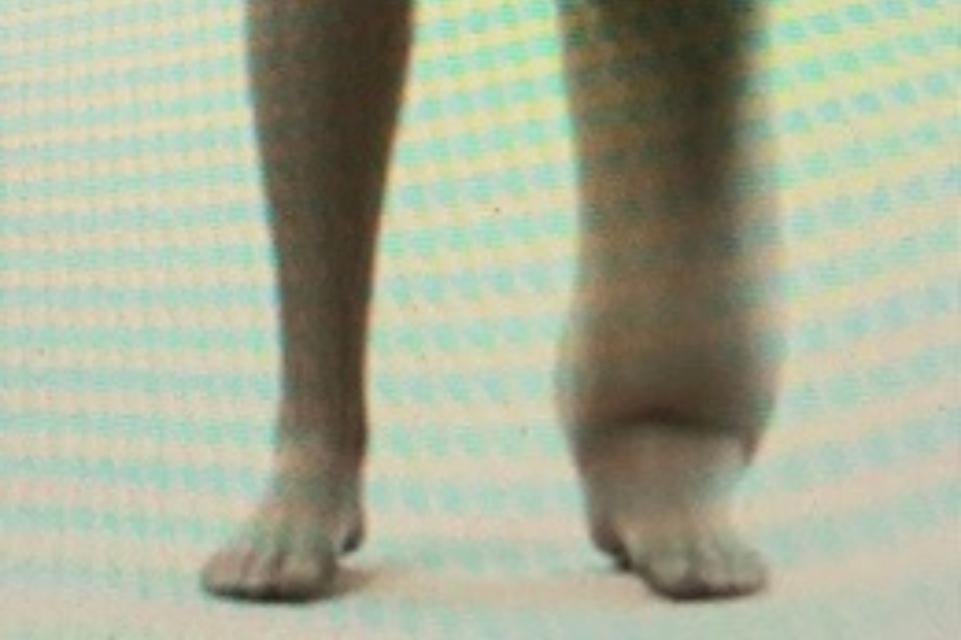
A Long‑Awaited Surgery
Monica’s road to surgery was not straightforward. Her procedure was postponed after she developed an infection, but she and her care team stayed the course, carefully managing her health until she was cleared for surgery.
Following her 2025 procedure, the difference was immediate. The persistent, heavy feeling in her leg was gone. She was also surprised by the easy recovery.
“It was the most painless surgery I ever had in my life — I didn’t even need to take Tylenol,” she said. “It was a six‑hour procedure, and I got up and walked right after.”
Dr. Panetta said a key advantage of using the Symani robot is that it allows surgeons to operate through extremely small incisions, making the procedure far less invasive than older approaches.
“Most people have scratched themselves worse,” he said, noting that significant discomfort or recovery issues are extraordinarily uncommon.
Recovery and Renewed Strength
In the weeks after surgery, Monica’s leg tightness and swelling gradually decreased. For the first time in years, she felt she was healing, not just managing her lymphedema.
Just 30 days after surgery, Monica joined other veterans on a 75‑mile Wounded Warrior Project Soldier Ride.
Dr. Panetta said patient success is measured not just by scans or limb size, but by restored freedom.
“She has maintained a very high level of activity that otherwise would not have been possible,” he said.
A Message of Hope
Following the breakthrough surgery, Monica continues to enjoy her significantly improved quality of life. Though she still wears compression stockings daily, she swims, power walks and stays active with fewer limitations.
Her days are now defined by more mobility, more stamina and more time to do the things she enjoys, without the crushing pressure that once defined her days.
She also hopes more people understand that lymphedema is not simply swelling. It is a serious condition affecting veterans, cancer survivors, trauma patients and many others.
Dr. Panetta agreed. “For a long time, patients were simply told this was something they had to live with, particularly if it was the result of successful cancer treatment,” he said. “But we now have the ability to intervene and change the course of the disease.”
“If sharing my story helps even one person seek treatment sooner or feel less alone,” Monica said, “then every step of this journey has been worth it.”