
Aortic Aneurysms
An aortic aneurysm is a bulge in the aorta, the largest artery in the body.
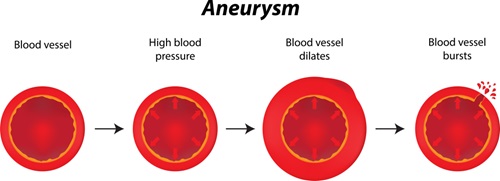
An aortic aneurysm occurs when an abnormal bulge develops in the walls of the aorta, the artery that carries oxygen-rich blood from the heart, through the chest and down to the abdomen. The aorta is the largest artery in the human body, with other arteries branching off of it to deliver blood to the rest of the body.
Although aortic aneurysms can occur in any part of the aorta, they most commonly develop in the infrarenal aorta (the section below the kidneys). If an aortic aneurysm grows large enough, it can burst and become a life-threatening situation.
Quick Facts: Aortic Aneurysms at a Glance
- What it is: An abnormal bulge in the walls of the aorta (the body's largest artery) that can become a life-threatening emergency if it grows large enough to burst.
- Risk Factors: While exact causes are unknown, risk increases with atherosclerosis, high blood pressure, advanced age, obesity, a history of smoking, chest or abdominal injuries, and congenital conditions like Marfan syndrome.
- Common Warning Signs: Often asymptomatic prior to rupturing, but depending on the location, an aneurysm can cause chest, back, or neck pain, shortness of breath, hoarseness, or a pulsating sensation and pain in the abdomen or groin.
- Emergency Red Flags: A ruptured aneurysm causes sudden and severe pain, an extreme drop in blood pressure, and shock, requiring immediate, life-saving medical treatment.
- Diagnosis: Because they often lack symptoms, high-risk individuals should undergo regular screenings using ultrasounds, CT scans, echocardiograms, or X-rays.
- Care at TGH: Individualized, comprehensive care through the Tampa General Hospital Heart and Vascular Institute, offering monitoring, medication management, and surgical intervention from highly skilled specialists.
Causes of Aortic Aneurysms
Researchers within the medical community have not yet determined exactly what causes aortic aneurysms. However, there are various risk factors that can increase the risk for an aortic aneurysm, including:
- Atherosclerosis (the hardening and narrowing of arteries), which can weaken the walls of the aorta
- Hypertension (high blood pressure), which can place stress on the aortic walls
- Congenital abnormality that can weaken the aortic walls, such as Marfan syndrome
- Damage to the aorta resulting from a chest or abdominal injury
- Advanced age
- Obesity
- A history of smoking
- A family history of aortic aneurysm
Symptoms of Aortic Aneurysms
Prior to rupturing, aortic aneurysms can be difficult to detect because they often fail to produce any symptoms unless they press against a nearby organ. When this happens, symptoms will vary depending on the location of the aneurysm. For example:
- A thoracic aortic aneurysm (TAA), which develops in the chest, can cause pain within the chest, upper back, neck and jaw, as well as shortness of breath, hoarseness, coughing, wheezing and difficulty swallowing.
- An abdominal aortic aneurysm (AAA), which forms in the abdomen, can cause a pulsating sensation as well as pain in the back, abdomen or groin that can radiate to the lower extremities.
A bursting aneurysm can also cause a number of symptoms, including:
- Sudden and severe pain
- Extreme drop in blood pressure
- Shock
A ruptured aneurysm can be a life-threatening emergency and requires immediate medical treatment.
Diagnosing Aortic Aneurysms
Because aortic aneurysms often cause no symptoms, people who are at a particularly high risk for developing this condition should attend regular screenings. While screening for AAAs generally relies on ultrasounds, screening for TAAs may involve computed tomography (CT) scans, echocardiograms, ultrasounds, X-rays or other diagnostic tests.
Treatment for Aortic Aneurysms
Once an aortic aneurysm is discovered, the goal of treatment is generally to prevent it from rupturing. This can often be accomplished with good blood pressure control using medications and monitoring. However, in certain cases, such as where an aneurysm is particularly large or quickly growing in size, surgery may be necessary.
Fortunately, if you have reason to think that you might have an aortic aneurysm, you can rely on Tampa General Hospital’s Heart and Vascular Institute for diagnosis and treatment. Our team includes some of the cardiology and vascular fields’ most experienced and skilled physicians, and we’re dedicated to providing each patient we see with comprehensive, individualized care.