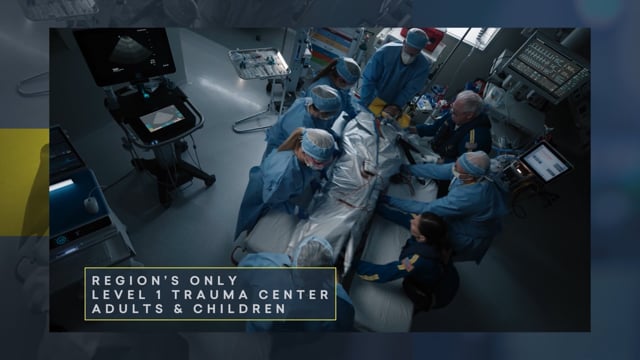
Tampa General Hospital’s Emergency Services Institute delivers the highest level of emergency care in the region, grounded in the strength of an academic health system and nationally recognized clinical excellence. As Tampa Bay’s only Level I Trauma Center, Tampa General is trusted to care for high volumes of the most critically injured and complex patients—24 hours a day, 365 days a year. We were the first hospital in Florida to earn national verification for Emergency General Surgery from the American College of Surgeons (ACS) and among only a select group of hospitals nationwide to achieve this distinction, reflecting our commitment to standardized, high-quality and timely emergency care. Tampa General became the first in the Region and third in the state to achieve the FRCE certificate. The program aims to improve cardiac arrest outcomes by establishing a statewide network of hospitals committed to resuscitation excellence. The world-class care we provide to our trauma patients has earned TGH recognition on the World's Best Hospitals 2025 list by Newsweek.
The Emergency Services Institute encompasses Tampa General’s network of hospital-based and freestanding emergency departments, aeromedical flight and ground transport services and advanced emergency capabilities designed to ensure rapid access to specialized care. Supported by board-certified emergency physicians and on-site specialists across every major discipline, our emergency teams are equipped to respond to everything from everyday emergencies to the most life-threatening conditions.
Working in close partnership across specialties, Tampa General delivers comprehensive trauma care, Acute Care Surgery, Emergency General Surgery, surgical critical care and advanced surgical rescue services. Together, these integrated programs create a seamless system of emergency and surgical expertise, making Tampa General a trusted referral destination for hospitals across Florida when lives depend on advanced care and academic precision.
Patients arrive by car, ambulance and helicopter. Those patients arriving by car should follow signs to the Emergency & Trauma Center where they receive complimentary valet parking.
Meet Our Leadership Team


Comprehensive Emergency Services
Tampa General Hospital’s Emergency Services Institute provides comprehensive, high-acuity emergency care for adults and children across a regional network of emergency departments, freestanding locations and aeromedical transport services. Supported by an academic medical foundation and on-site specialists, our emergency teams are equipped to manage everything from common emergencies to the most complex, life-threatening conditions—seamlessly and without delay.
Clinical Decision Unit (CDU)
The Clinical Decision Unit (CDU) is an extension of Tampa General’s emergency care model, designed for patients who require focused observation, advanced diagnostics or short-term treatment beyond an initial emergency evaluation. Staffed by experienced emergency physicians and supported by rapid access to specialty consultation, the CDU allows for timely decision-making, improved patient flow and reduced unnecessary hospital admissions—without compromising quality or safety.
Adult Emergency Services
Adult Emergency Services at Tampa General deliver advanced care for serious illness and injury, backed by immediate access to specialists across all areas of medicine. Board-certified emergency physicians are on-site 24/7, working alongside trauma surgeons, intensivists, cardiologists, neurologists and other experts. As part of Tampa Bay’s only Level I Trauma Center, our adult emergency teams are prepared to manage the most complex and time-sensitive cases, which is why hospitals across Florida rely on Tampa General as a referral destination.
Pediatric Emergency Services
Children requiring emergency care benefit from specialized pediatric expertise within an academic health system built for complex care. Our Pediatric Emergency and Trauma Center provides access to pediatric-trained specialists, advanced diagnostics and coordinated surgical and critical care services, ensuring young patients receive age-appropriate, compassionate and comprehensive treatment when it matters most.
Aeromed
Tampa General’s Aeromed Transport Services provides both air and ground critical care transport, extending advanced emergency services across West Central and Southwest Florida.
Toxicology & Poison Control Services
Toxicology Consult Service and Florida Poison Center
The Florida Poison Information Center at Tampa General is one of only three poison centers in Florida, providing 24/7 toxicology expertise for overdoses, envenomations, environmental exposures and other toxicologic emergencies.
Poison Patient Transfers
Tampa General’s Transfer Center coordinates transfers for patients requiring specialized toxicology care. Referring facilities can request a transfer 24 hours a day by calling 1-800-247-4472, where the team facilitates physician consultation and patient movement to ensure rapid access to Tampa General’s emergency and toxicology expertise.
Additional Related Services
Tampa General Hospital’s emergency and acute care surgery programs are supported by a broad range of highly specialized services and nationally recognized centers, ensuring patients have immediate access to advanced expertise during the most critical moments.
- Brain and Spinal Cord Injury Center of Excellence
- Comprehensive Stroke Center
- Chest Pain Center
- Burn Center and Aortic Center
- Advanced Emergency Subspecialty Expertise